Precise templating
Accurate measurement for curved, winding and standard stairs.

Custom stair runners for straight, curved and spiral staircases across the GTA. Stair runners add elegance, safety and noise reduction, but they need precise measurement, pattern matching and expert binding, so our in-home consultation helps you choose the right style for your staircase.
We install full stair carpeting and custom runners on straight, curved and spiral stairs, fitting every tread and riser with clean lines and secure fastening. Warranty coverage by service type, stated in writing on your estimate.

Accurate measurement for curved, winding and standard stairs.
Runners aligned at landings, turns and transitions.
Cotton tape, surging and hand-finished edges.
Proper fastening on treads and risers, no loose edges.
Every staircase is templated and fitted on site. Below are the stair carpeting styles we install most across the GTA — one team, one estimate, whichever suits your stairs.
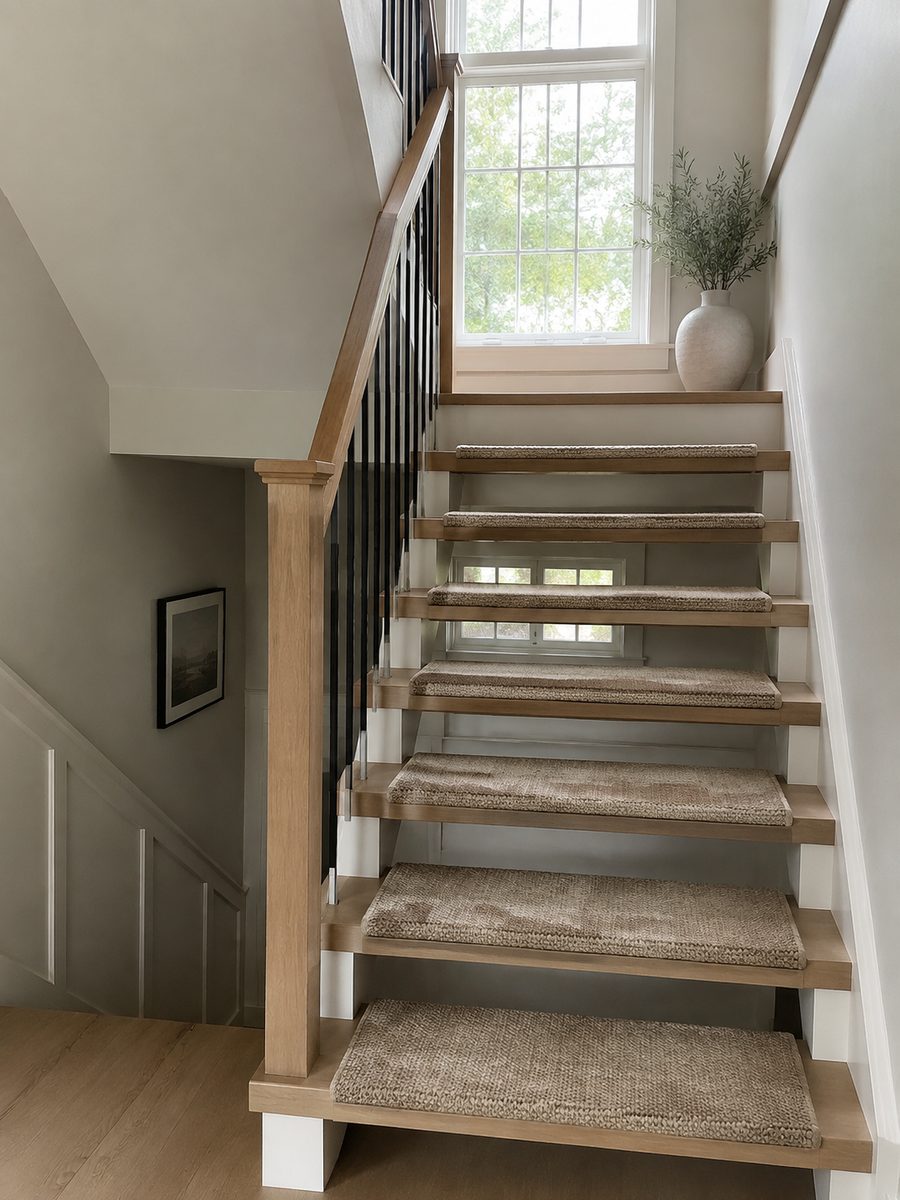
A runner down the centre of the tread with the wood borders left exposed. We match the pattern across every step, landing and turn, and secure it cleanly at each riser.
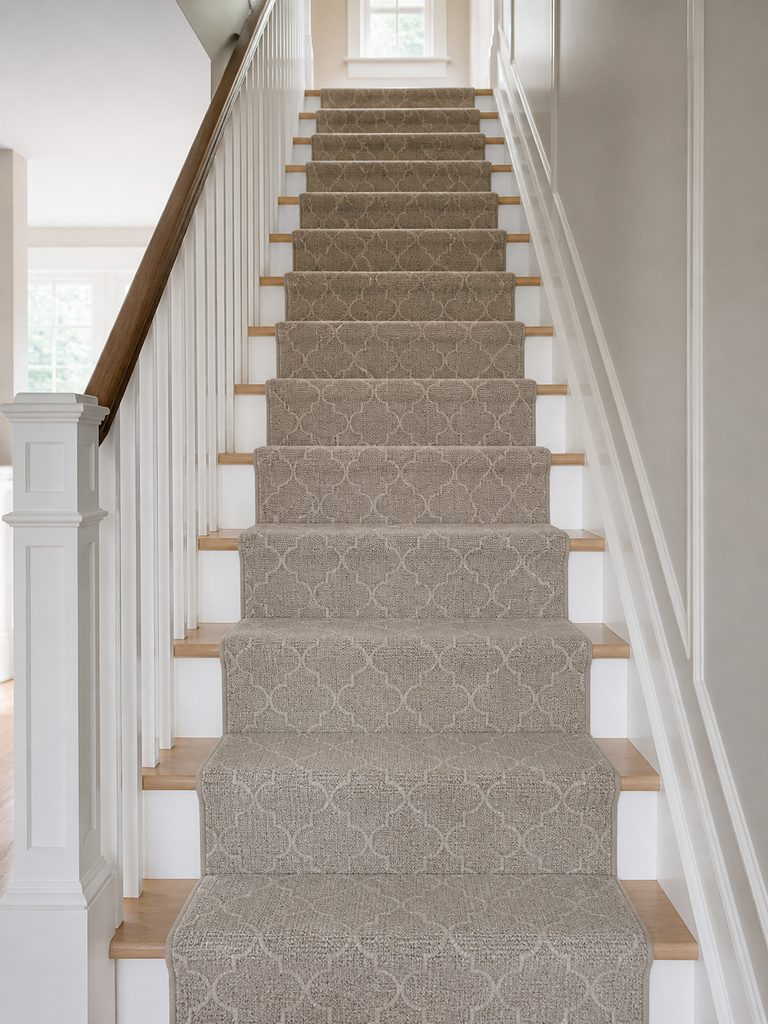
Carpet wall-to-wall across the full width of each tread and riser for a soft, quiet, uniform finish — the warmest and most slip-resistant option for busy family stairs.

Winding and spiral stairs need each tread templated individually so the runner follows the curve without bunching. Careful fitting keeps the lines clean around the sweep.
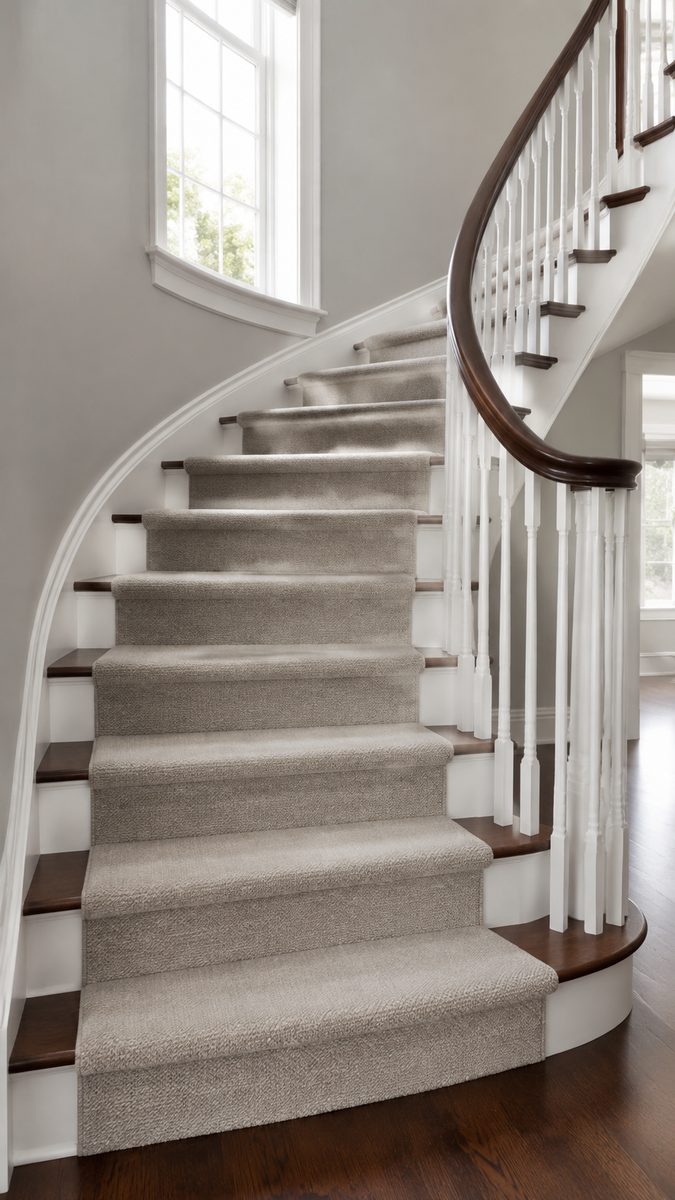
The grand, sweeping staircase look — a wide waterfall or Hollywood-style runner that flows down an open, curving flight as a centrepiece for the entry.
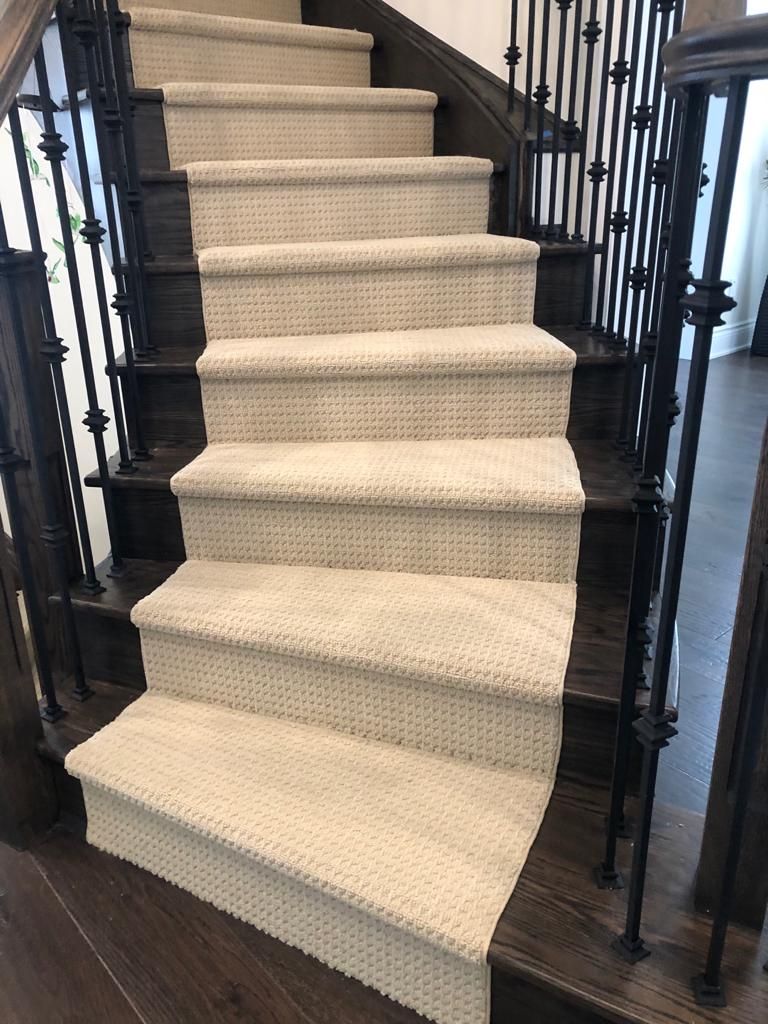
Colours and textures shift inside your home. We bring runner and carpet samples so you can choose the right style for your staircase with confidence, then measure on site.


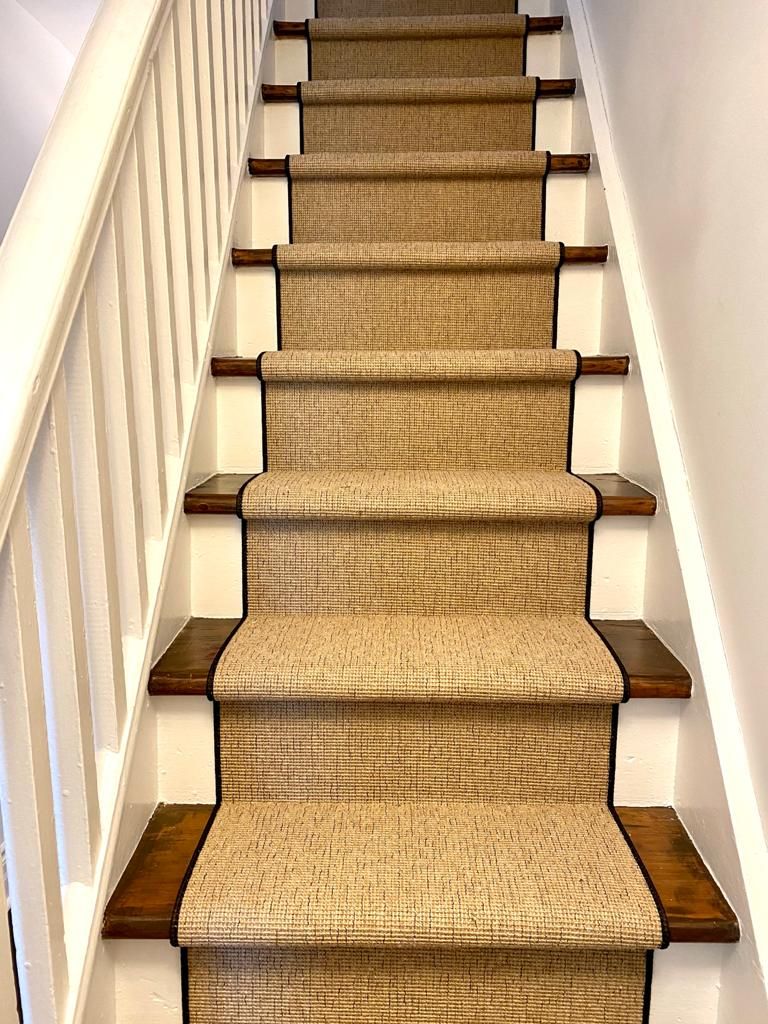
Stairs concentrate wear on the front edge of every tread, so the fibre you choose matters more here than on a flat floor. Nylon is valued for its resilience and tends to spring back well in a busy stairwell. Wool brings natural softness and a warm look, and it hides crushing gracefully. Olefin and polyester resist stains and cost less, though they can flatten sooner under heavy use. Blends aim to balance these traits. When samples come to your home, we can talk through how each fibre is likely to hold up on your particular staircase.
A low, dense pile is usually the practical choice for a runner. Short loops or tightly packed cut yarn have less height to bend as feet roll over each nosing, so the surface crushes and mats more slowly than a deep, plush pile would. A denser weave also wraps more cleanly around the curved edge of a tread, holding a crisp line instead of gaping. Patterns and flecked colours help as well, quietly disguising the crumbs and footprints that gather on stairs. The result is a runner that keeps its shape and looks tidy between cleanings.
What sits under and behind a runner matters as much as the carpet itself. A firm underpad cushions each step, softens sound and takes some of the strain off the fibre, which helps the runner wear evenly over the years. On stairs the runner also needs to be held firmly so it cannot shift or ripple underfoot. Depending on the staircase, that can mean tackless strips set in the crease of each step, staples hidden in the pile, or traditional stair rods. A secure, well-tensioned fit is what keeps a runner both safe and neatly in line.
A runner can make a staircase safer as well as warmer, since carpet offers more grip than a bare polished tread. To gain that benefit the fit has to be right. A runner that is loose, rippled or poorly tensioned can become a trip hazard rather than a help. Firm fastening at every step, a suitable underpad and a pile that is not overly long all contribute to sure footing. If anyone in the home uses the stairs slowly or unsteadily, mention it early so we can suggest a texture and fit that feels secure underfoot.
There are two common ways to fit a runner over each step. The waterfall method lets the carpet fall straight down from the nosing to the next tread without being pressed into the back corner, giving a soft, relaxed line that is quicker to install. The upholstered method, sometimes called cap and band, wraps the carpet snugly around the front of each nosing and into the crease, following the shape of the step for a tailored finish. Waterfall tends to suit simpler runs, while cap and band shows off shaped or curved stairs. We can show how each looks on your steps.
A stair runner rewards steady, simple care. A few habits keep it looking its best:
Grit is the quiet problem on stairs, since it grinds against the fibre with every step, so keeping the runner clean does as much for its lifespan as any single feature of the carpet.
Drop a photo here or use the attach button, carpet damage, room overview, stairs, etc.