Traffic-smart halls
Denser styles recommended for long runs and landings.

Hallways and bedrooms often share a floor plan but need different carpet performance. Halls want denser fibre and solid underpad that holds up to daily traffic, pets and winter salt. Bedrooms can go softer for comfort and sound.
We bring Shop-at-Home samples so you can compare hallway-tough styles against bedroom plush in your own light. Transitions between rooms are planned so thresholds stay clean and doors clear the pile height. A Limited Lifetime Labour Warranty may apply on approved carpet supply-and-install projects, stated on your estimate.

Denser styles recommended for long runs and landings.
Softer plush options for sleep spaces and kids rooms.
Pile height checked against doors and transitions.
Long hallway runs tensioned to stay flat.
We bring Shop-at-Home samples so you can compare hallway-tough styles against bedroom plush in your own light, with transitions planned between rooms.


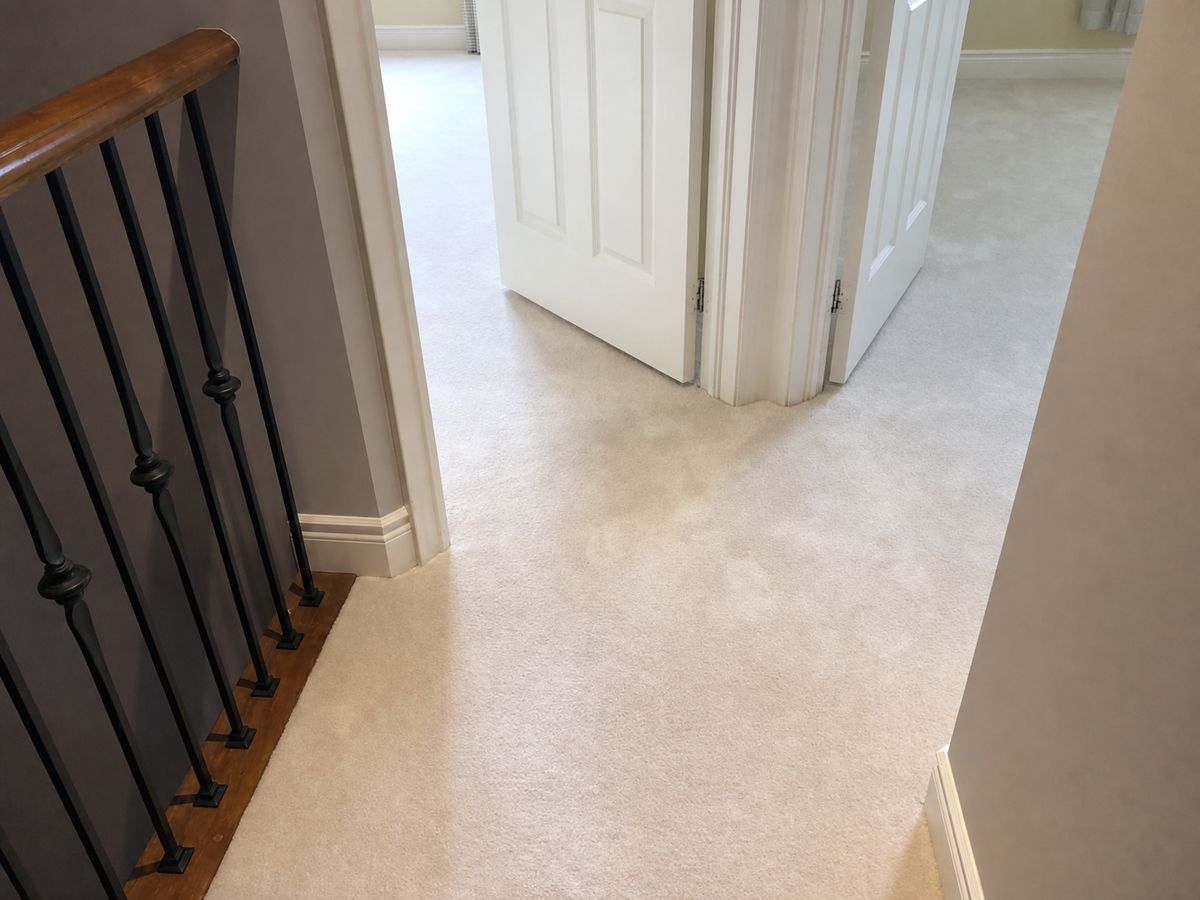

Hallways, landings and stairs carry concentrated foot traffic because nearly every trip through the home passes over them. Fibres here are compressed and twisted underfoot far more often than in a bedroom, so a denser pile with a tighter twist tends to hold its look for longer. Loop styles and low, dense cut piles resist matting along these runs, while very deep, soft piles can flatten into visible pathways over time. Choosing a resilient construction for connected halls and stairs is usually about keeping the surface even where the household walks most.
Bedrooms see gentler, less frequent traffic, which leaves more room to prioritise comfort underfoot. A softer, deeper cut pile feels pleasant on bare feet in the morning and suits rooms where people relax rather than pass through. Because the surface is not being scuffed throughout the day, a plusher style can hold up well in a sleep space even though the same carpet might mat in a hallway. This is why a comfort-first choice that would be impractical in a hall can be a sensible fit behind a bedroom door.
Connected upstairs spaces can be finished in a single carpet for a continuous look, or split so the hall takes a harder-wearing style and the bedrooms take something softer. A shared carpet keeps sightlines clean and avoids seams at every doorway, which some homeowners prefer. Running different piles lets each room play to its purpose, though it does introduce transitions at the thresholds. There is no single correct answer here; it depends on how the rooms connect, where the doors fall and how much the look matters against the wear.
Softness comes from both the fibre and the way the pile is cut. Finer fibres and taller pile heights tend to feel more cushioned to the touch, while a plush or textured cut pile gives bedrooms their soft, settled feel. Textured finishes also help hide everyday footprints and vacuum marks, which keeps a bedroom looking tidy between cleanings. When you compare samples, pressing a hand into the pile and releasing it shows how quickly a style recovers, which is a useful signal for how it will feel and hold up over the years.
The pad beneath the carpet shapes both how a floor feels and how long the carpet lasts. A firmer, denser underpad supports the pile in halls and on stairs so it flexes less and resists crushing, while a slightly softer pad can add comfort in bedrooms. Thickness matters too, since a pad that is too thick under a hallway carpet can move underfoot and shorten the life of the surface above it. Matching the pad to the room, rather than using one specification everywhere, helps the finished floor perform as intended. Underpad also adds a measure of warmth and dampens sound, so footsteps and voices carry a little less between rooms.
Colour choices can follow the same room-by-room logic. Bedrooms often suit warmer, calmer tones that make a space feel restful, and deeper or muted shades can lend a cozy feel to a room meant for winding down. Hallways benefit from more practical tones that carry the everyday soil and traffic of a busy home without showing every mark, which is why mid-range and flecked colours are common for these runs. Looking at samples in the real light of each room, at different times of day, gives a clear sense of how a colour will settle in once the carpet is down.
Stairs need a firmer, more careful fit than a flat hallway run because the carpet has to wrap the edge of every tread. Fitters generally use one of two methods, and the choice affects both the look and how the front of each step wears. The nosing, the front lip of a step, takes the most pressure, so a snug fit there matters for both safety and how long the carpet holds up. Stair runs are often finished in a harder-wearing pile than the bedrooms they lead to, since each step meets the same footfall as the hall below.
Because a bedroom is a place for sleep, the carpet there is worth keeping clean in its own way. Soft, deeper piles hold more dust and fibre between the tufts than a tight hallway loop, so regular vacuuming does most of the work of keeping the surface fresh. A new carpet can carry a mild smell for a short while after fitting, which usually fades with airing and open windows. Closets often take the same carpet as the room, so it is worth deciding early whether to carry it inside or stop it at the door.
Drop a photo here or use the attach button, carpet damage, room overview, stairs, etc.