Seam planning
Seams placed for open-concept sight lines and furniture layout.

Living and dining rooms are where guests gather and where carpet has to look finished from every angle. We plan seam placement away from sight lines and match pile direction so light does not create odd shading across the room.
Shop-at-Home samples let you compare plush, textured and patterned styles beside your furniture and window light before we measure. Installs are professionally stretched by our in-house crew with quality underpad selected for comfort and longevity. A Limited Lifetime Labour Warranty may apply on approved carpet supply-and-install projects, stated on your estimate.
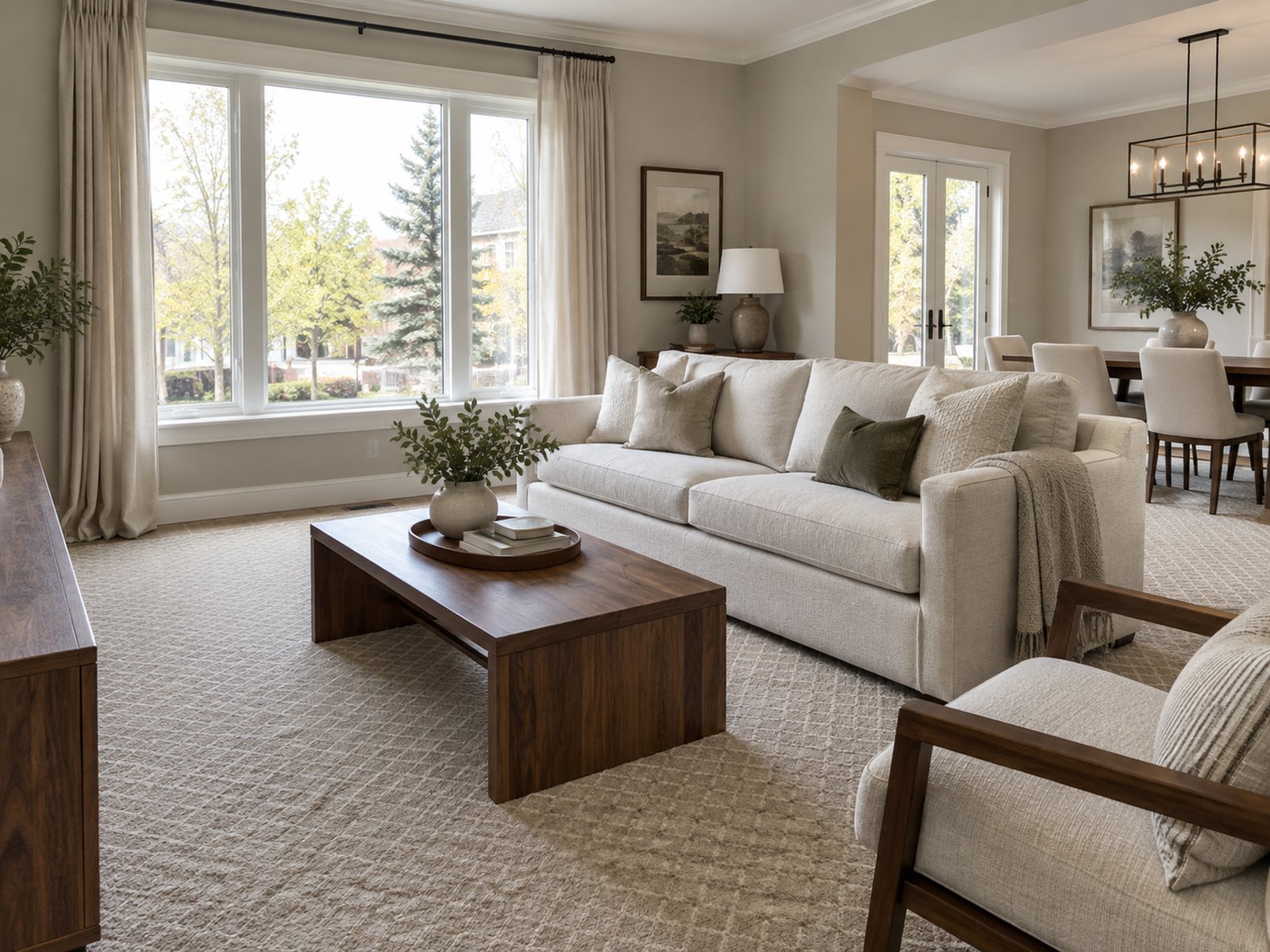
Seams placed for open-concept sight lines and furniture layout.
Density chosen for soft living spaces without mushy feel.
Tight finish that resists ripples in high-use rooms.
Edges trimmed, transitions set, rooms ready to use.
Shop-at-Home samples let you compare plush, textured and patterned styles beside your furniture and window light before we measure.
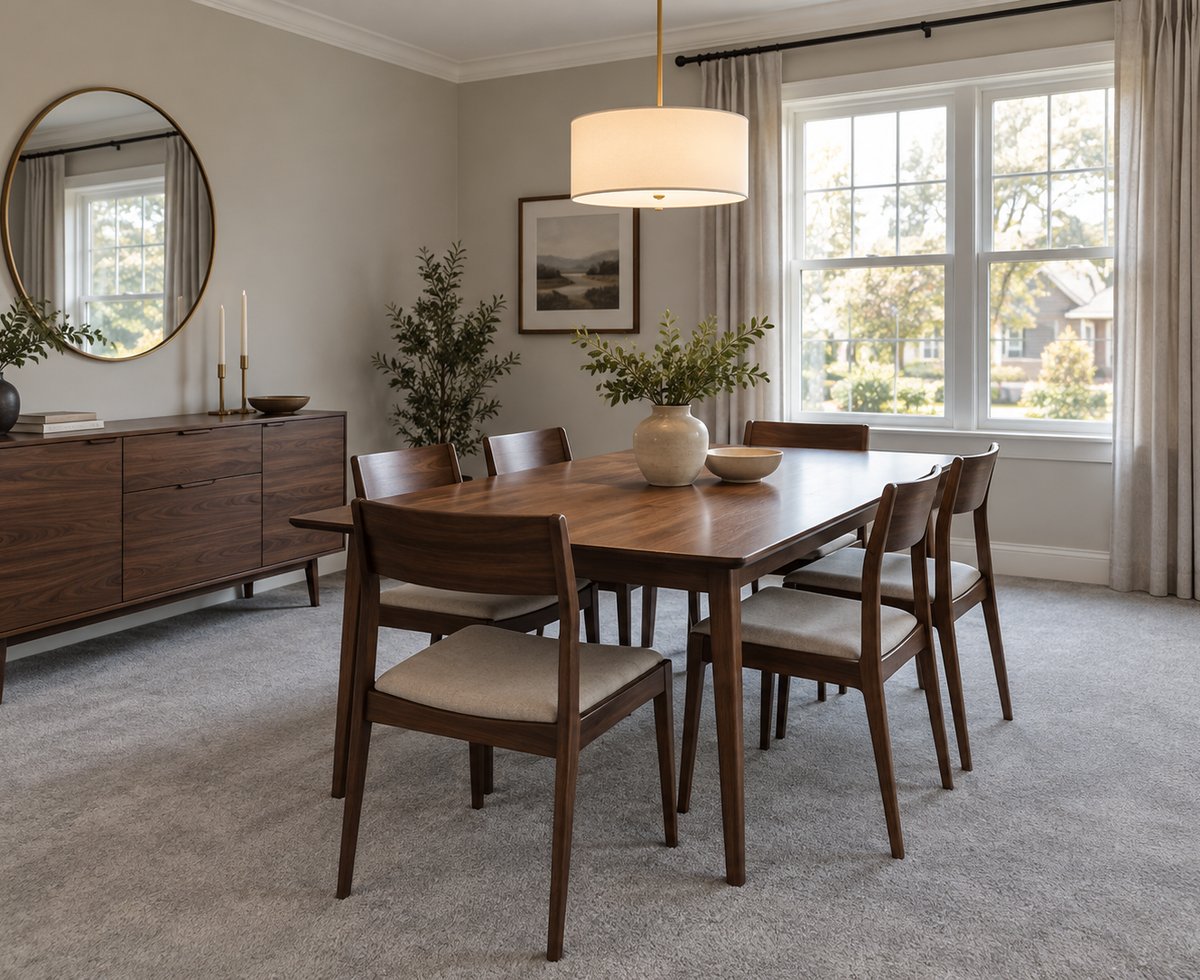
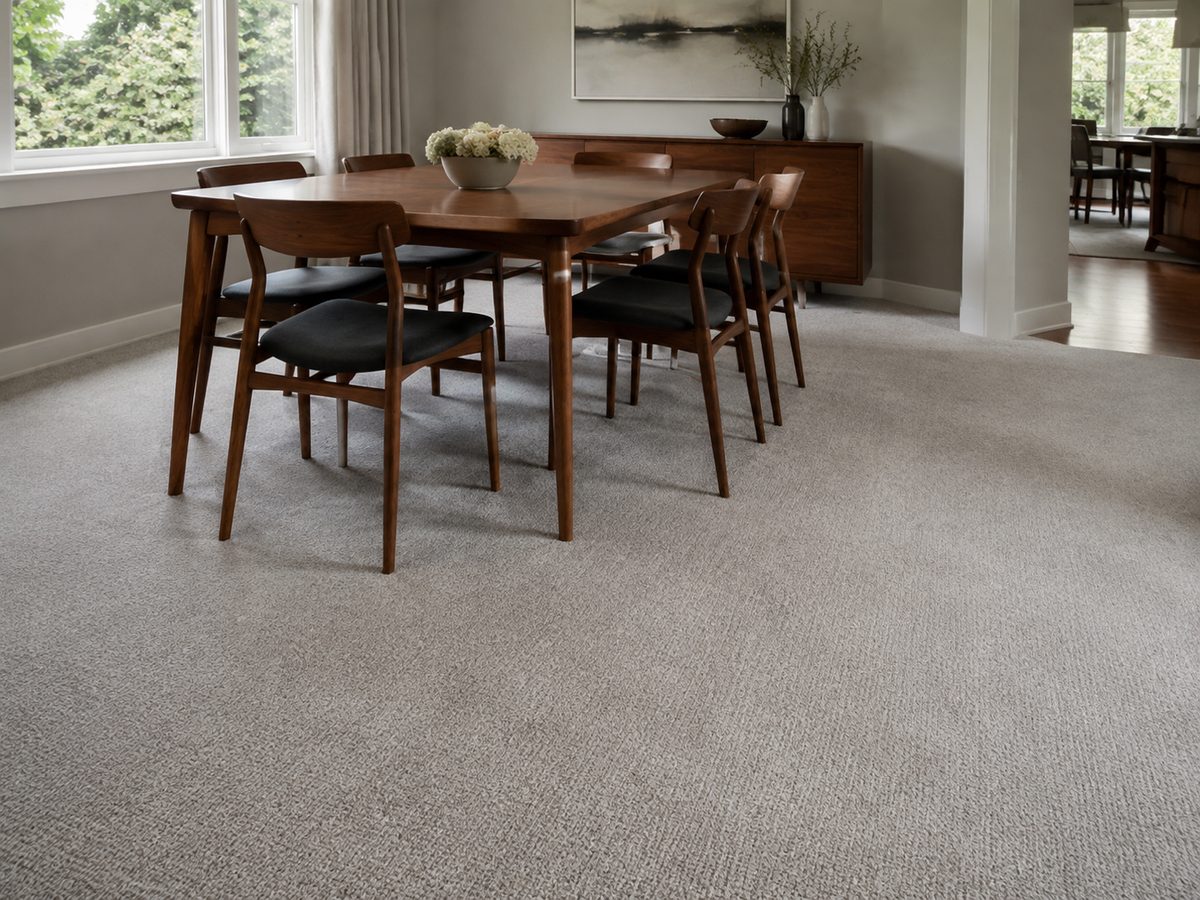
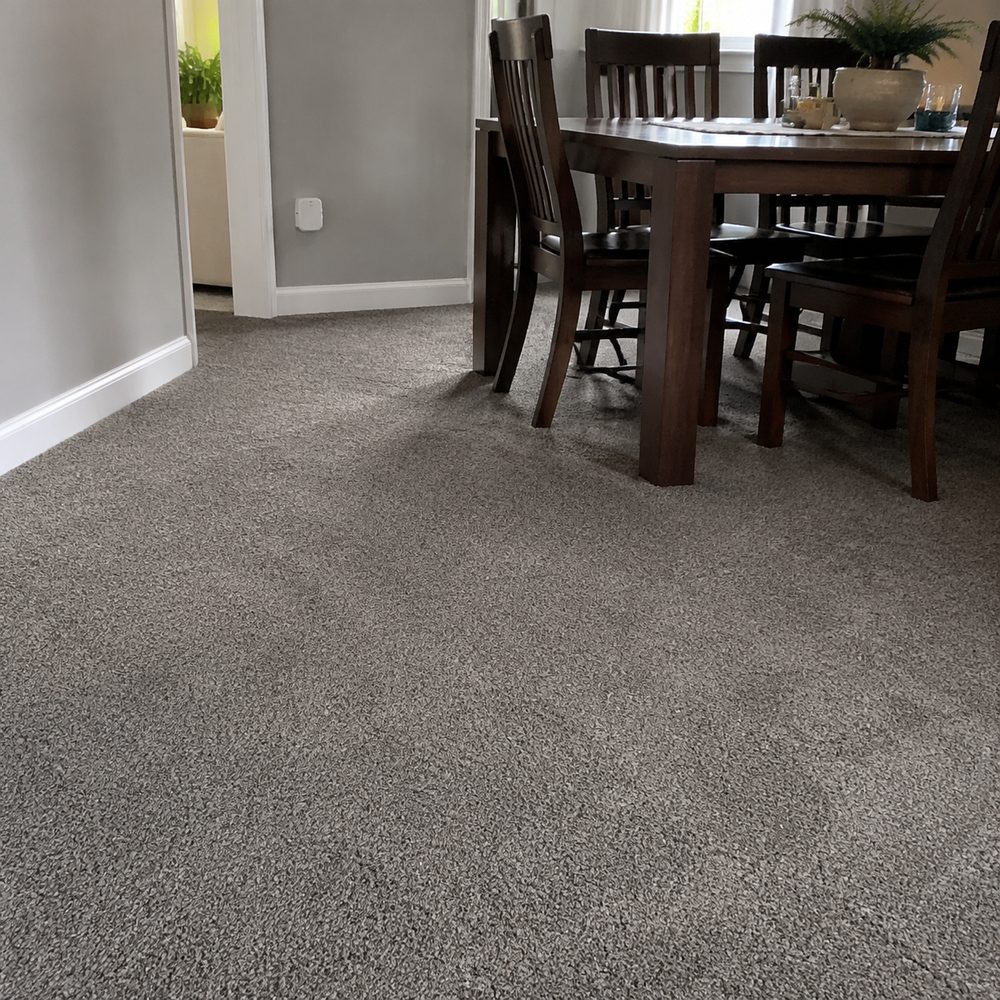

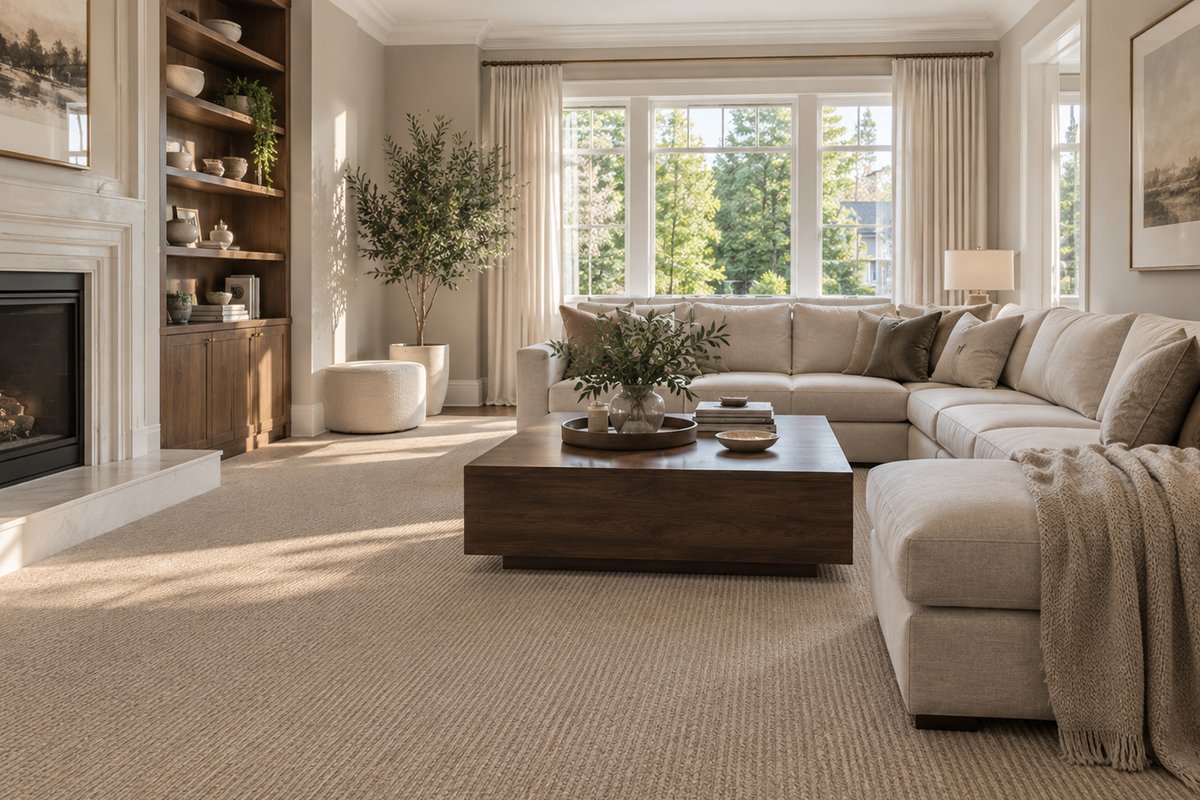
Living and dining rooms carry two jobs at once. They are where a family relaxes at the end of the day, and they are also where guests are welcomed and where meals happen close by. Carpet chosen for these rooms tends to work well when it feels soft underfoot yet holds up to regular use. In practice that means looking past the surface feel of a sample and asking how a style keeps its appearance after months of foot traffic, vacuuming and the occasional accident. A denser construction usually keeps its look longer in shared family spaces, while a very deep, loose pile may feel lovely on the first day and show wear sooner in a busy room.
Because eating and drinking happen in or beside these rooms, spill resistance is worth thinking about early. Many carpets are made with stain-resistant fibres or treatments that give you time to blot a spill before it sets, which matters most in the stretch of floor around a dining table. When you compare samples, a few practical questions help:
Mid-tone colours and subtle flecks are forgiving in a dining zone, since they hide crumbs and small marks between cleanings more readily than a single flat shade.
Footprints and vacuum lines are a common concern in a room that is meant to look tidy, and the style of the carpet has a lot to do with how visible they are. A textured cut pile, sometimes called a trackless finish, twists the fibre so light scatters instead of reflecting in clean lines, which softens the look of footprints and shading. Patterned and loop constructions also break up the surface and tend to disguise daily marks. A smooth, uniform plush shows these marks quite readily, so it suits a quieter room more than a high-use family space. Comparing textures beside your own furniture and window light makes these differences easy to see before you decide.
Carpet does more than look soft. It adds a layer of insulation that makes a room feel warmer under bare feet, which is welcome through a long Canadian winter. It also absorbs sound rather than letting it bounce around, so conversation, footsteps and television noise stay gentler. In an open-concept home where the living and dining areas share one space with the kitchen, that sound softening is easy to notice, and a suitable underpad adds to both the comfort and the quiet.
In many homes the living and dining areas flow into a hallway or a kitchen with hard flooring, so where the carpet begins and ends becomes part of the design. Carpet can be used to define a living or dining zone within a larger open plan, giving each area a sense of its own footprint without adding walls. Where it meets tile, hardwood or vinyl, a clean transition keeps the change of height tidy and comfortable to walk across. Planning these edges before installation, together with seam placement, helps the finished rooms read as one considered space rather than a set of separate patches.
Living and dining rooms hold heavy pieces that sit in one spot, along with chairs that move several times a day. A sofa or a full bookcase can press lasting dents into the pile, while dining chairs work the same patch of floor as they are pushed back from the table. A few habits reduce the wear:
Denser constructions tend to recover their shape after furniture is moved, while a deep, loose pile holds an impression for longer.
Living rooms often carry the widest windows in the house, so a sunny stretch of floor can slowly lighten over the years while a shaded corner stays closer to the original shade. Fading is gradual and easy to miss until a piece of furniture is moved and the covered area looks darker than the rest. When you compare samples, ask how the fibre and dye hold up to daylight, since some fibres resist fading more readily than others. Rotating loose furniture, drawing sheer coverings across bright windows and leaning toward a mid-tone rather than a very dark or very pale shade all help the room age evenly.
Drop a photo here or use the attach button, carpet damage, room overview, stairs, etc.