Sanctuary and hall installs
Sanctuary aisles and fellowship halls matched to use.

Community spaces need flooring that handles events and gatherings. We schedule around services and rentals.
Sanctuary aisles, fellowship halls and classrooms each get goods matched to how the room is actually used, from chair storage to potluck spills. Warranty coverage by service type, stated in writing on your estimate.
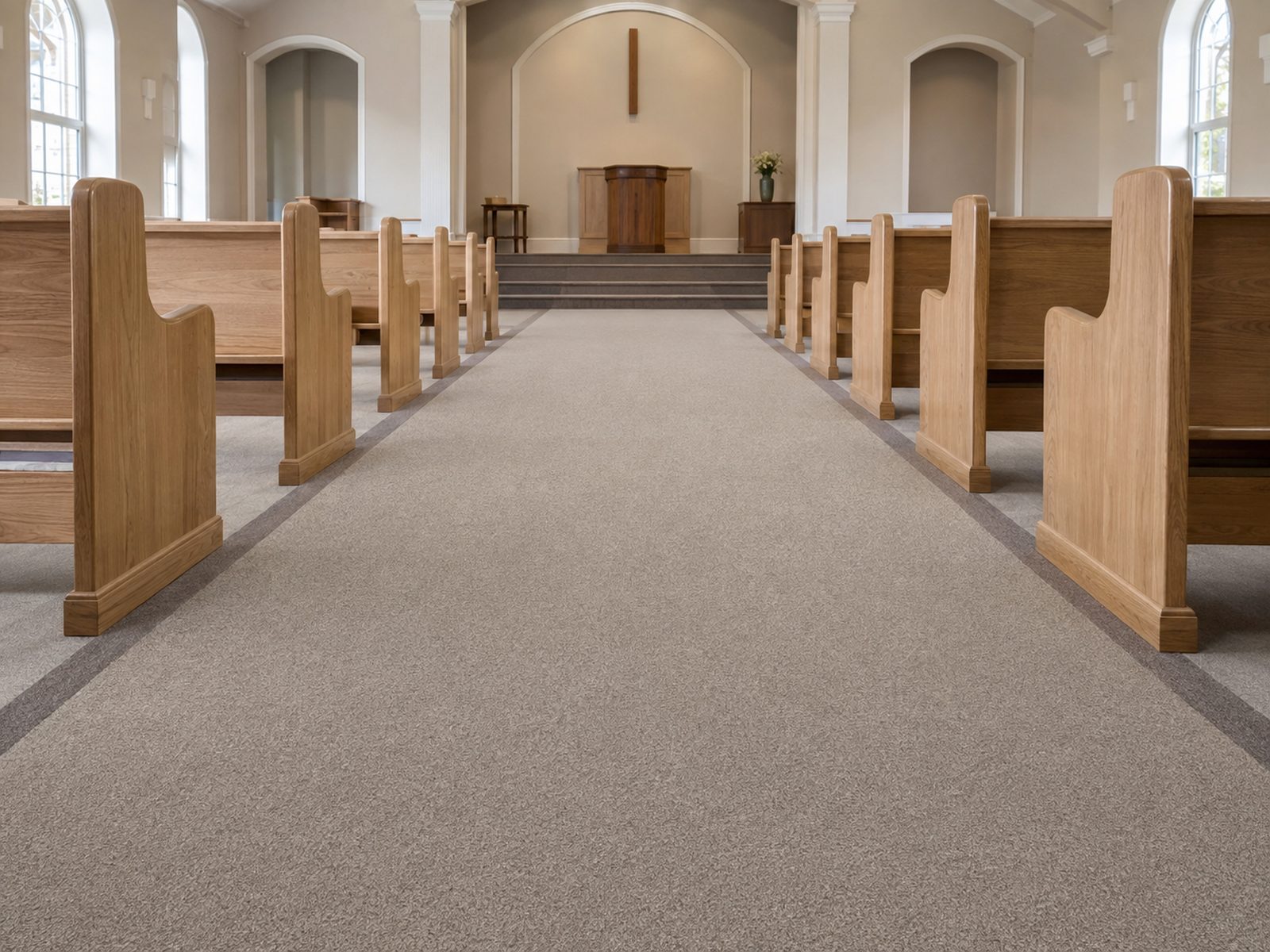
Sanctuary aisles and fellowship halls matched to use.
Work scheduled around services and rentals.
Constructions that handle chair storage and event setups.
Rooms left ready for the next gathering.
Worship and community rooms need durable flooring installed around service calendars and events.
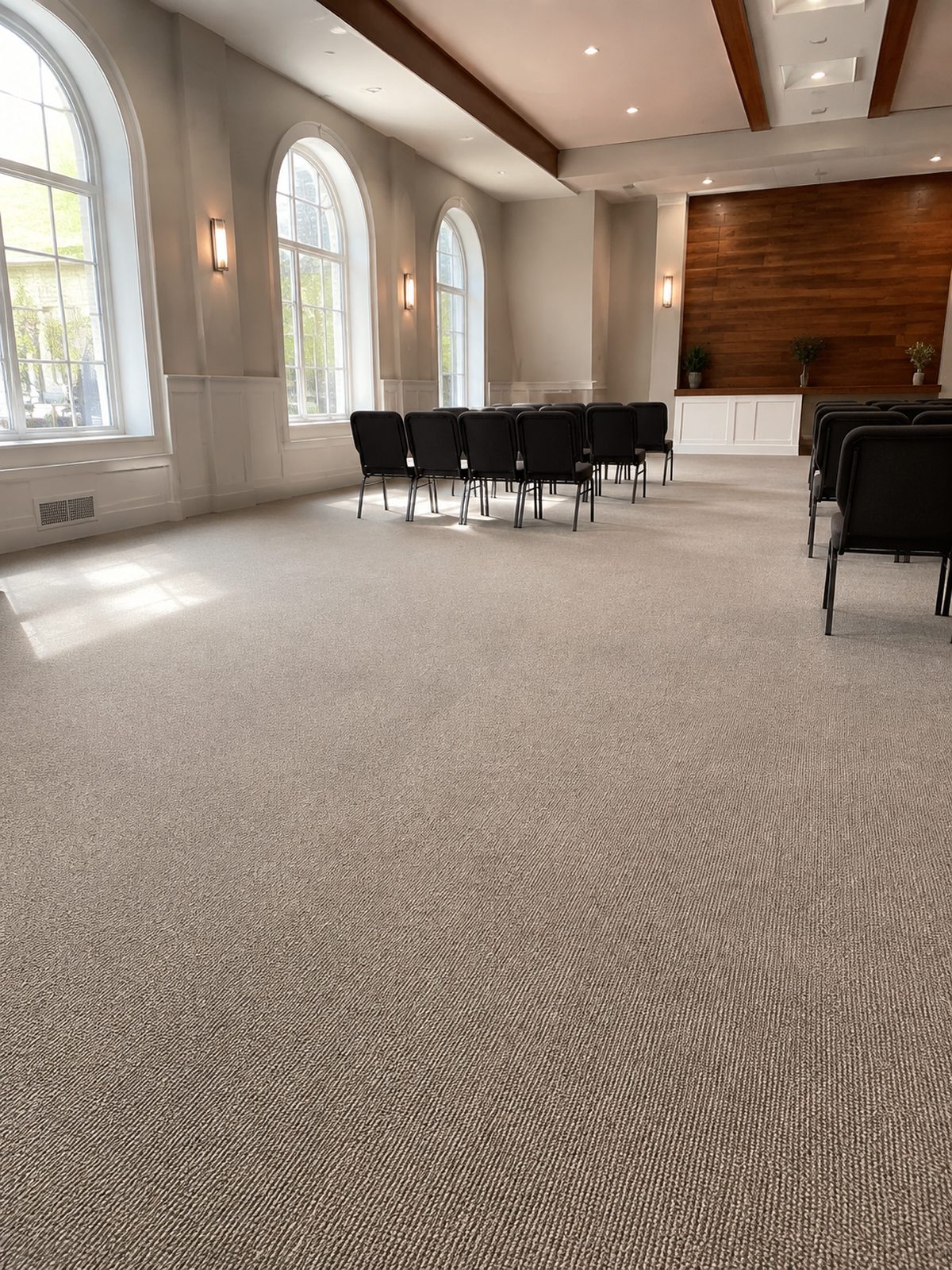
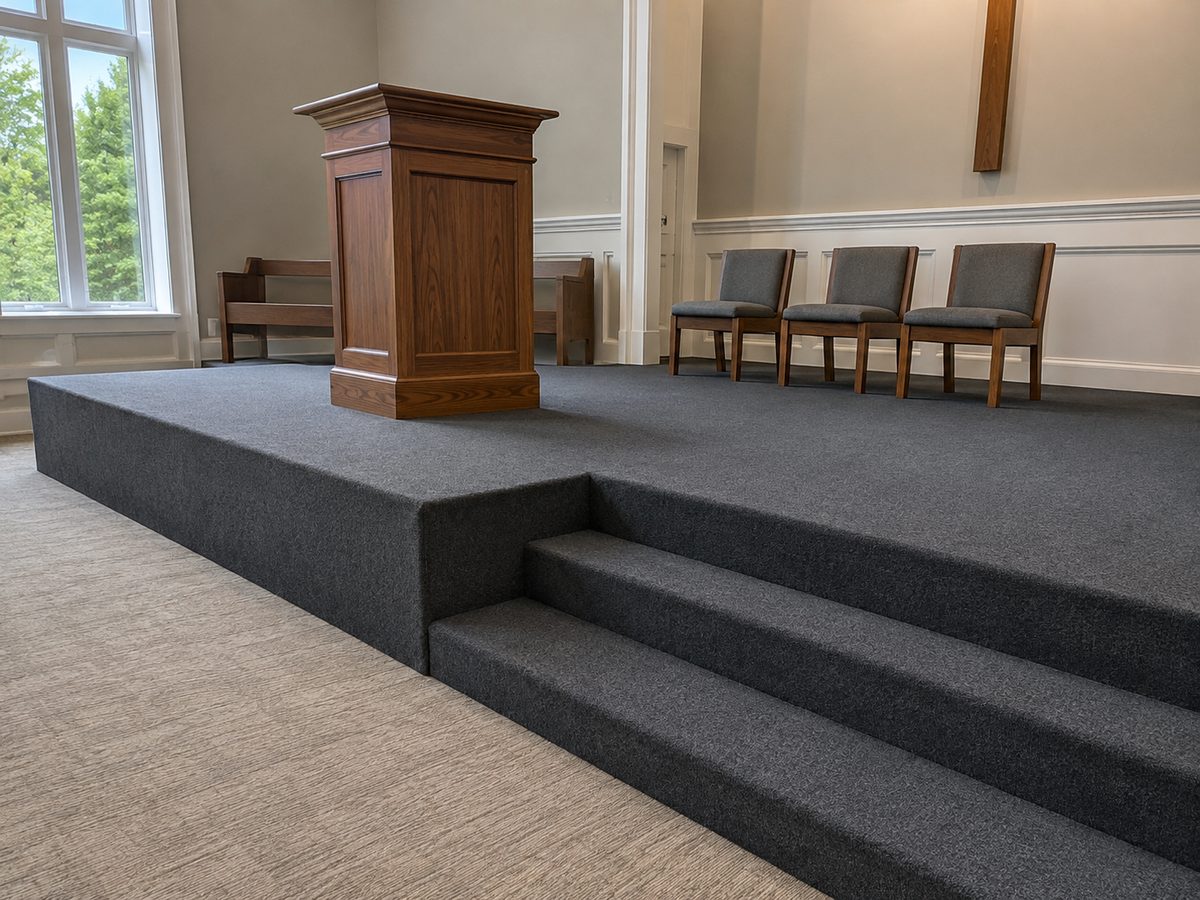

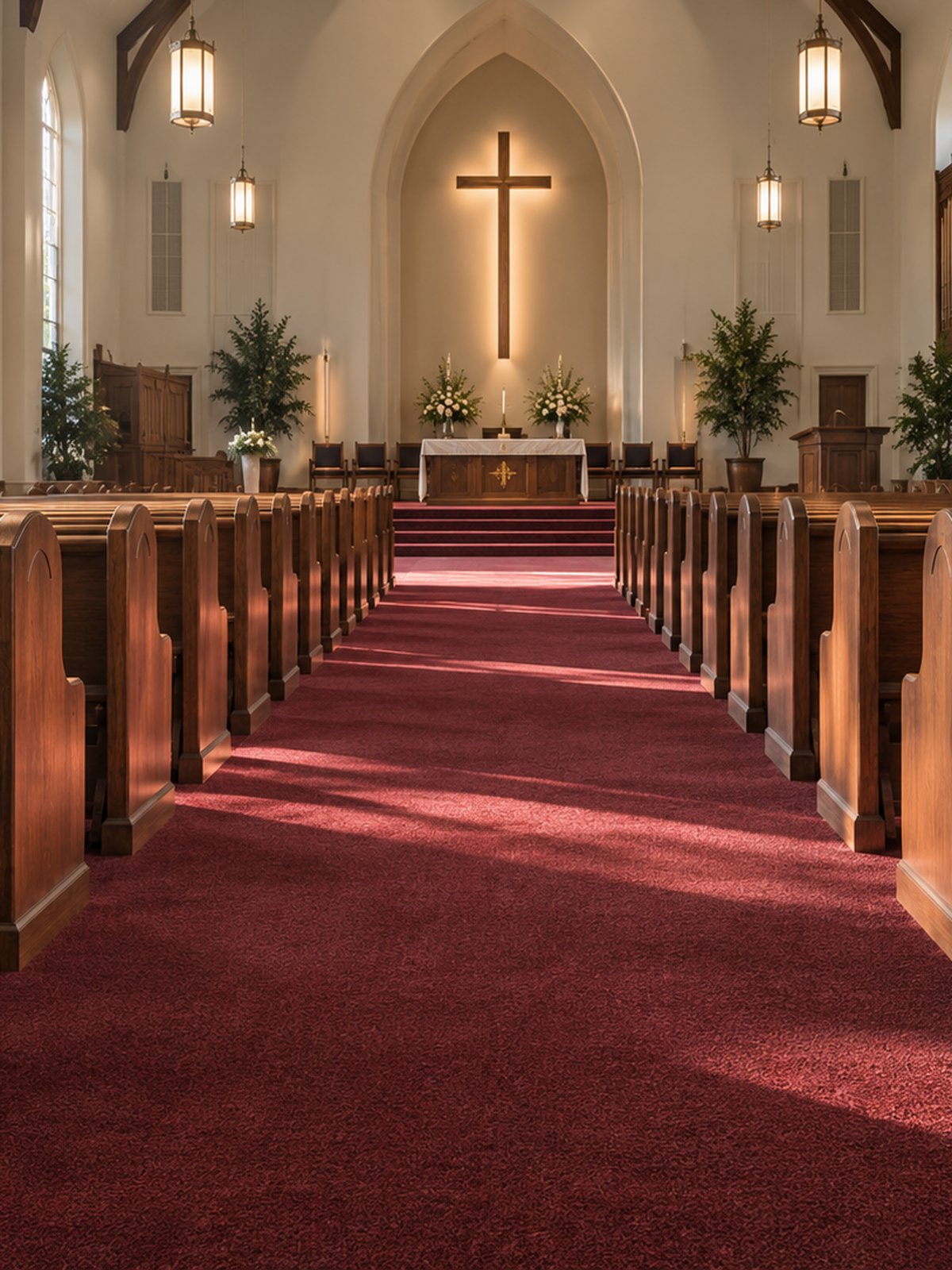

Broadloom, the wide-roll carpet installed wall to wall, suits large open sanctuaries and halls where the floor should read as one continuous surface. In areas where foot traffic concentrates and spills are more likely, carpet tile can be practical because single tiles can be lifted and replaced without redoing the whole floor.
Many buildings use both, with broadloom across the main floor and tile through the paths that take the heaviest wear.
Hard surfaces reflect sound, which can blur spoken words and lengthen the echo during music. Carpet absorbs some of that reflected sound, which can help speech carry clearly from a lectern or pulpit and soften the reverberation in a room used for both quiet reflection and lively gatherings. How much sound is absorbed depends on the carpet construction and the underlay beneath it, so it helps to weigh the room's main uses, from sermons to choirs to community meetings, when comparing options.
A congregation stewards funds given in trust, so durable and cost-conscious choices matter. Loop and low-pile constructions tend to hold up well in halls and corridors while keeping material costs reasonable, and a sensible underlay can extend the life of the carpet above it. Planning the project in phases, such as addressing the busiest areas first, lets a committee spread the work across budget cycles rather than committing to everything at once.
Large rooms are wider than a single roll of broadloom, so seams are part of any honest plan. Placing seams away from the main sightlines and the busiest walking paths keeps them less visible and less prone to wear. Running the pile in a consistent direction across the room keeps the colour reading evenly under the lights, since carpet can look lighter or darker depending on which way the fibre lies. We map these details before installation so the finished floor looks intentional.
Worship and community rooms are used for decades, so calm colours and restrained patterns tend to serve longer than trend-driven choices. Soft neutrals and muted tones work alongside stained glass, wood and existing furnishings, and a subtle fleck or tone-on-tone pattern helps hide everyday soil between cleanings without drawing the eye. A simple pattern also makes future repairs easier to blend, since a busy design is harder to match years later.
Community buildings are rarely empty, with worship services, rentals, classes and weekday programs filling the calendar. We plan the work in coordination with your office so quieter windows are used and each area is returned to service before the next gathering. Where a room must stay partly in use, the work can be sequenced section by section, with clear communication about which spaces are available on which days.
Worship and community spaces welcome people of every age and level of mobility, so the floor should be easy and safe to cross. A low, dense pile rolls more smoothly under wheelchairs and walkers than a deep, soft one, and it takes less effort to push a cart or a mobility aid across. Where carpet meets tile, stone or wood, a proper transition strip keeps the change in height gradual so it does not catch a toe or a wheel. We check these thresholds at doorways, ramps and the front of the room, where movement tends to gather.
Community buildings host coffee hours, shared meals and children's programs, so the carpet needs to handle everyday spills between cleanings. Solution-dyed fibres resist staining well because the colour runs through the fibre rather than sitting on the surface, which helps when tea, juice or coffee reaches the floor. A few simple habits keep a floor looking cared for:
Drop a photo here or use the attach button, carpet damage, room overview, stairs, etc.