
Services: Carpet Carpet Sales & Installation Wall-to-Wall Carpet Affordable Carpet Basement Carpet Berber & Plush Commercial Carpet Tile
Services: Repair & Stairs Carpet Repair & Stretching Re-stretching & Ripples Flood & Water Damage Stairs & Stair Runners Custom Stair Runners Full Cover Stair Carpeting Curved & Spiral Stairs Scarlett O’Hara Style Squeaky Floors
Services: Hard Surfaces Luxury Vinyl Plank (LVP/LVT) Laminate Flooring Engineered Hardwood Floor Preparation
Commercial Carpet
Shop-at-Home & Deals Shop-at-Home Service Book Shop-at-Home Monthly specials
About Our Story Mission & Values How We Work Why Victorious Warranty Commercial Clients Careers
Service Areas Toronto Region Peel Region York Region Durham Region Halton Region All service areas
Gallery & Blog Project Gallery Carpet Installs Stairs & LVP Projects Learning Centre / Blog Clients FAQ hub Pricing FAQ Carpet glossary

Carpet in Basements

Basements

Carpet is one of the most comfortable ways to finish a below-grade basement. It makes the room warmer underfoot, softens sound, and turns a cold concrete slab into a space the whole family will actually use. It is also one of the more affordable and easy-to-maintain basement flooring choices, as long as moisture is properly managed before and after the install.

No one enjoys stepping onto an ice-cold basement floor, and many basement slabs are uneven, cracked, or chipped. Carpet and a good underpad add welcome warmth and insulation while softening minor imperfections that would otherwise need costly levelling under a hard surface. With the right fibre and padding, a finished basement can feel just as cozy as any room upstairs.

Basement carpet over a proper subfloor
Good to know

Carpet in basements, explained

Is carpet a good choice for a basement?

Yes. Carpet is one of the most practical and affordable ways to finish a basement, provided the space is dry. It adds warmth over cold concrete, absorbs sound, and creates a soft, comfortable surface for play areas, media rooms, and guest spaces. The key is to plan for moisture first, then choose a fibre and underpad suited to below-grade conditions.

How do I deal with basement moisture before carpeting?

Basements sit below grade, so they see more humidity and temperature change than the rooms upstairs. Before any carpet goes down, look for signs of dampness, seepage, or a musty smell, and address grading, downspouts, or a leaking foundation if needed. A moisture test on the slab and a dehumidifier during humid months go a long way toward keeping the finished floor healthy.

What carpet and underpad work best below grade?

Synthetic fibres such as polypropylene (olefin), polyester, and nylon are the usual choice for basements because they do not absorb water the way natural fibres do and cope well with minor dampness. Wool and wool blends are better kept to dry, well-ventilated rooms upstairs, since their natural fibres are more prone to mould and mildew. For the cushion, a moisture-resistant rubber or synthetic underpad is a safer pick below grade than a felt or fibre pad that can hold water.

How do I prevent mould and mildew under basement carpet?

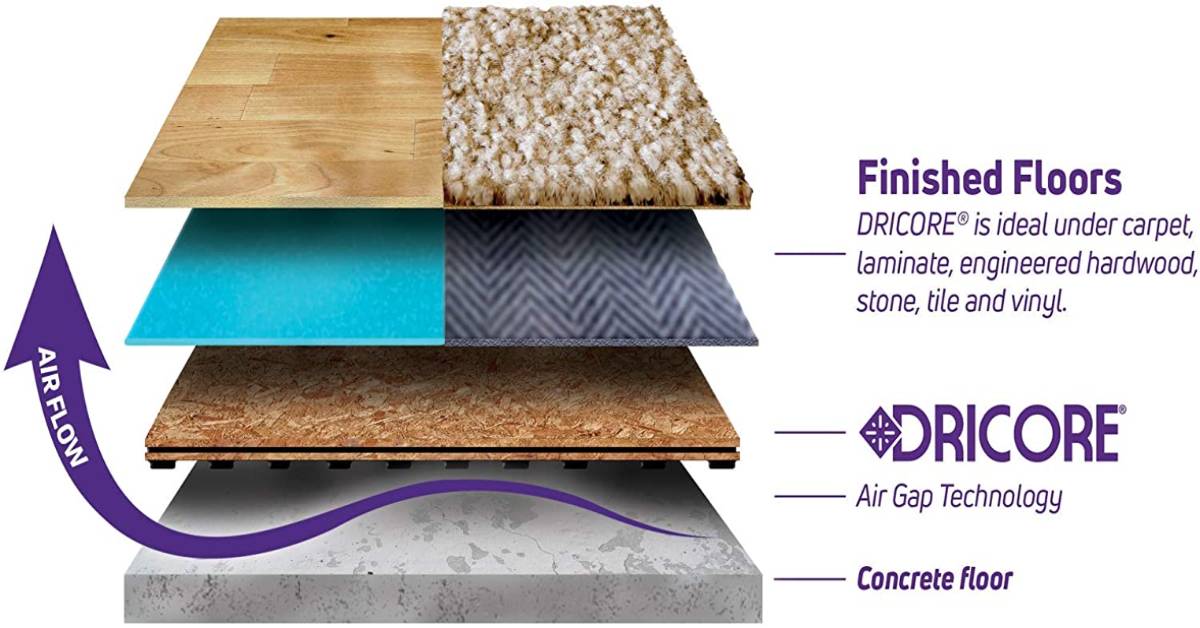
Mould needs moisture, so the best prevention is keeping the space dry. Manage humidity with a dehumidifier, fix any water entry at its source, and choose a synthetic carpet with a moisture-resistant underpad rather than materials that soak up water. Adding an air gap between the slab and the carpet with a subfloor panel also helps keep the underside of the floor dry.

Should I put carpet over a concrete subfloor, and do I need a subfloor panel?

Carpet can go directly over a sound, dry concrete slab, but many homeowners add a raised subfloor panel first. These panels create a small air gap and a moisture break between the cold concrete and the carpet, which makes the floor warmer and drier underfoot. On uneven or chilly slabs a subfloor panel is often worth the extra step, and it pairs well with carpet and a quality underpad.

What if my basement has flooded before?

If your basement has flooded, the priority is finding and fixing the cause before new carpet goes in, whether that is drainage, a sump pump, or a foundation issue. Synthetic carpet is one of the few floor coverings that can sometimes be dried and salvaged after clean-water flooding, though that depends on how long it stayed wet and what the water carried. It is best to have the space assessed in person so the flooring is matched to the real conditions, and you can reach our team at (416) 858-7006 to arrange a visit.

Didn't find your answer?

Call (416) 858-7006 or request a preliminary estimate. No obligation.

Call Text Estimate