Modular grids and pattern layouts
Pattern and direction planned on site.

Carpet tile lets you replace damaged modules without a full tear-out. Ideal for occupied offices and high-wear corridors. Pattern direction, attic stock and transitions are planned up front so future module swaps stay simple.
Modular tile keeps corridors and offices online and protects long-term maintenance budgets, so you can refresh wings without shutting the whole floor for a week. Warranty coverage by service type, stated in writing on your estimate.
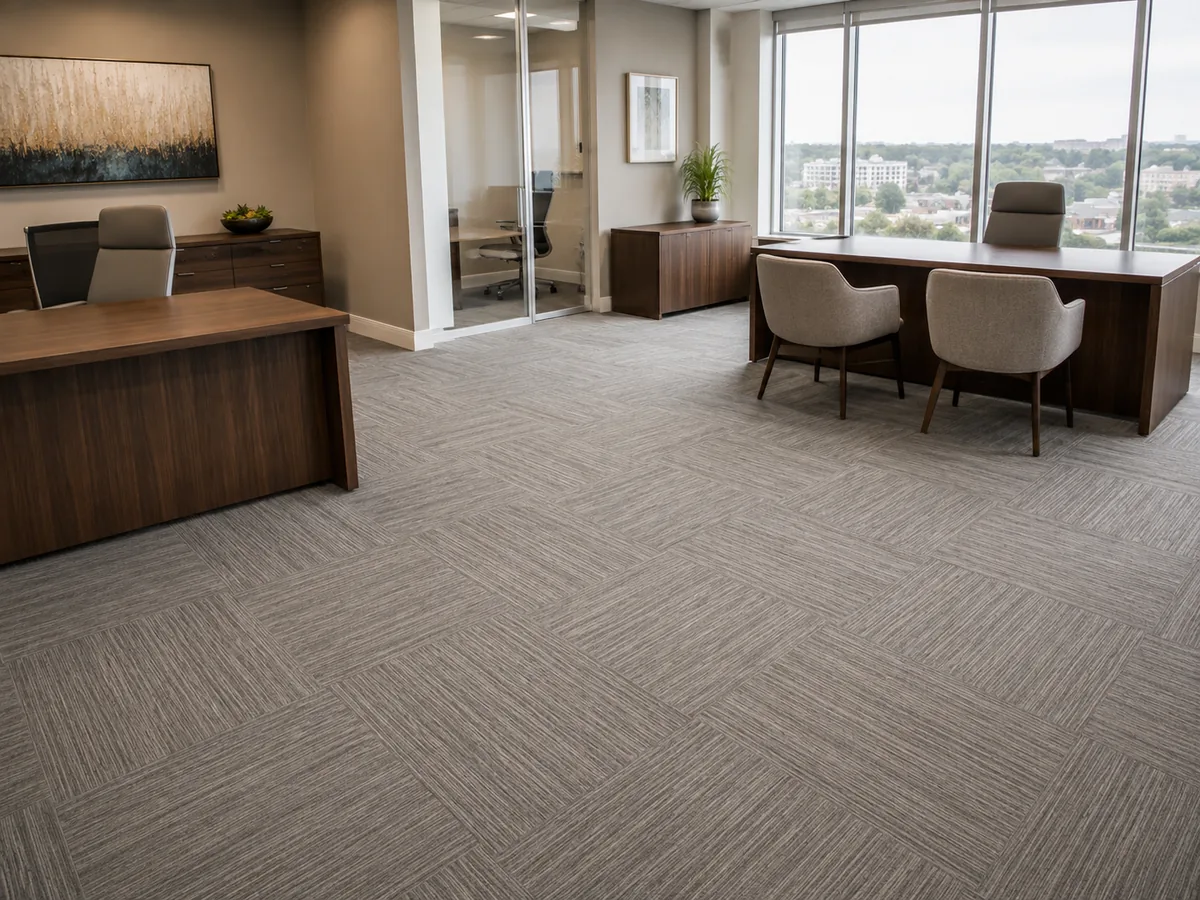
Pattern and direction planned on site.
Swap worn modules without a full tear-out.
Low-VOC adhesives available when required.
Built for your cleaning and traffic patterns.
Damaged modules swap without a full tear-out. That keeps corridors and offices online and protects long-term maintenance budgets.
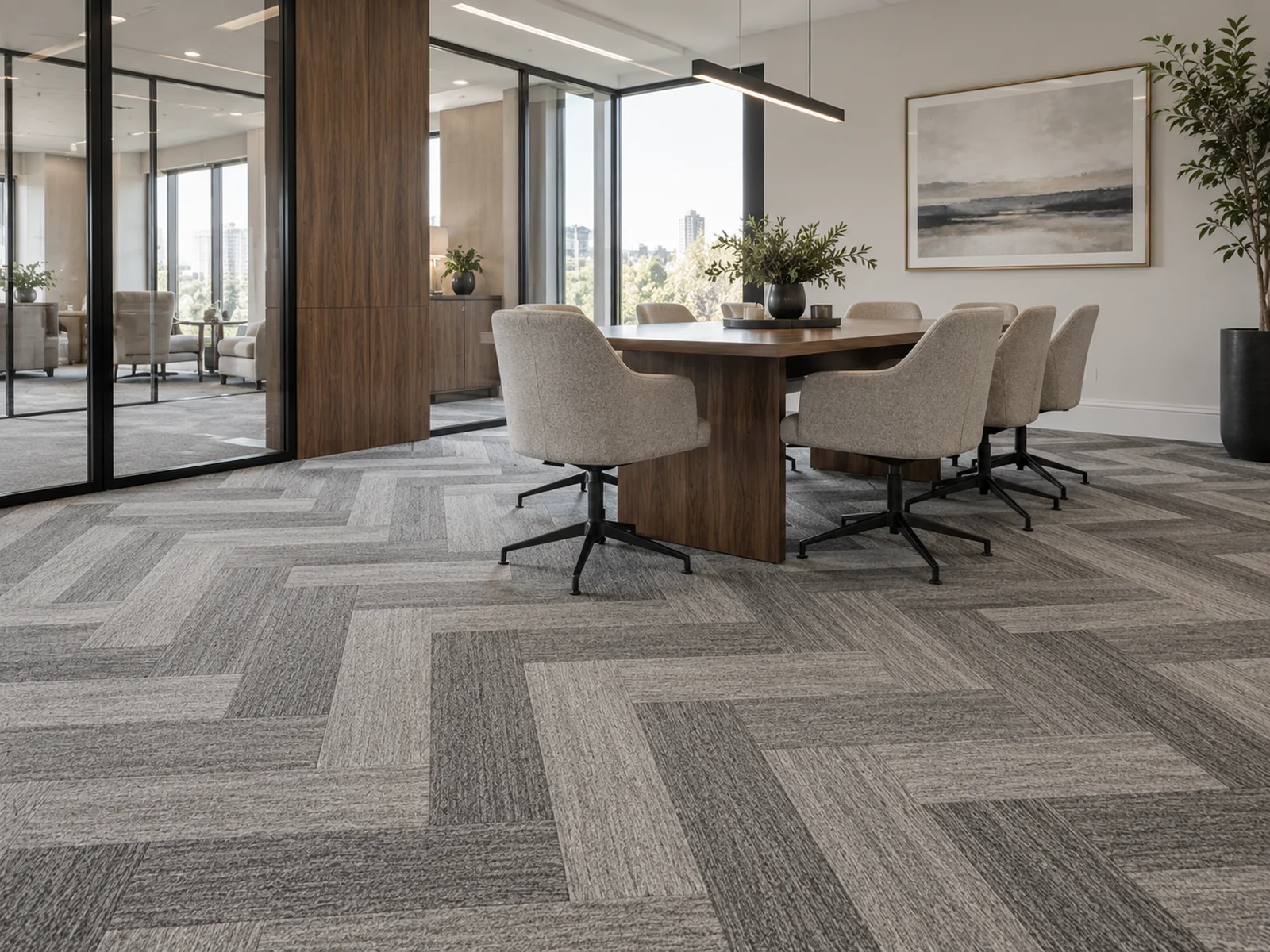
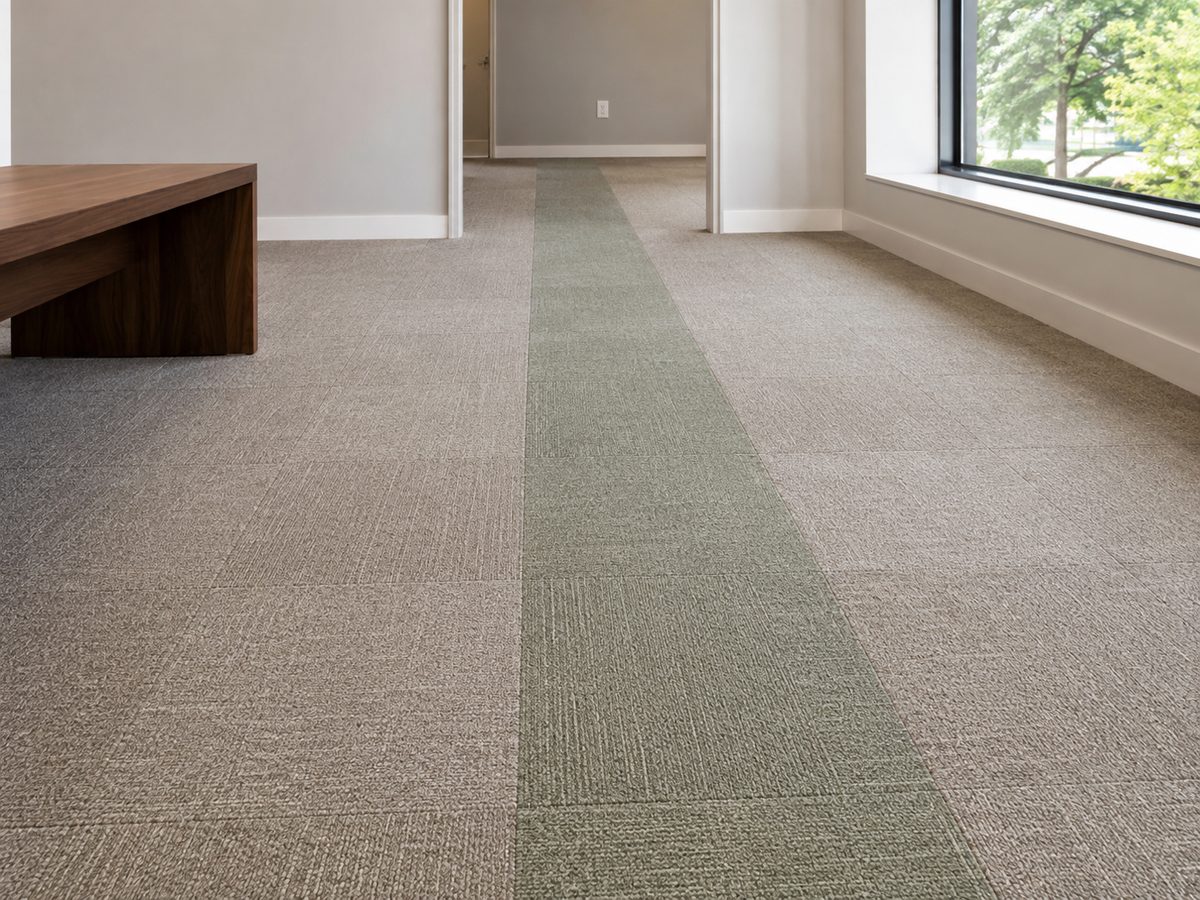
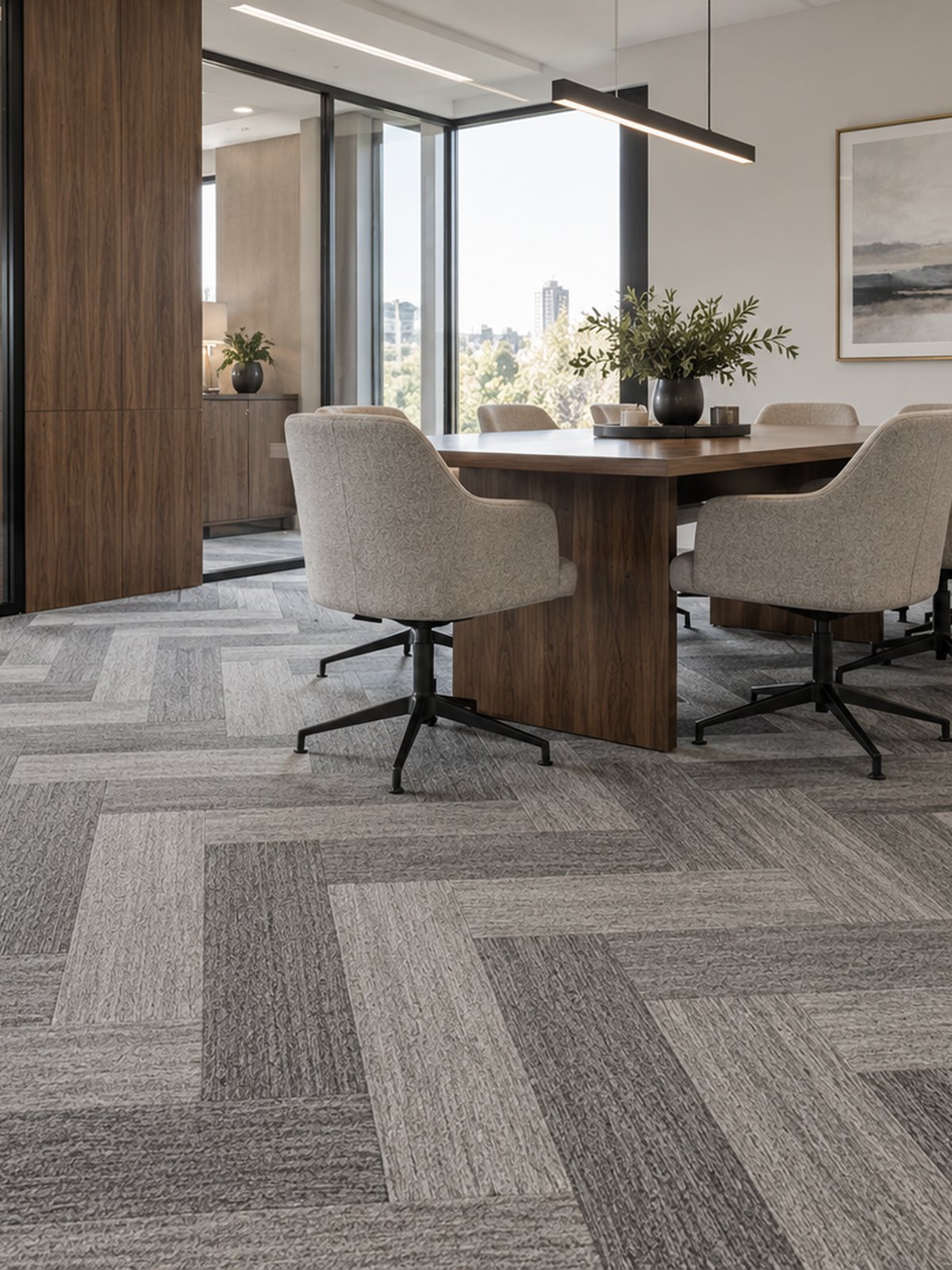
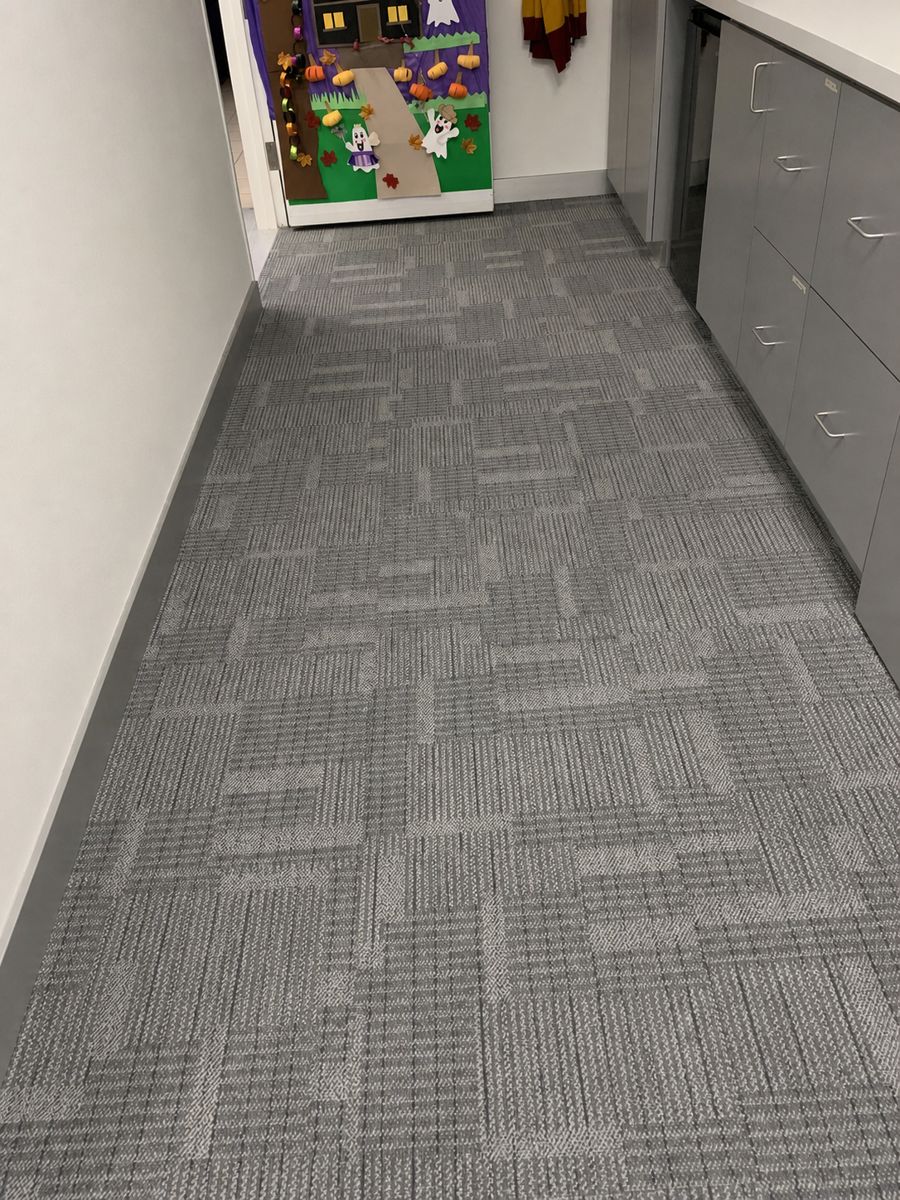

Modular carpet tile is carpet manufactured as individual squares or planks rather than one continuous roll. Common formats are 50 by 50 centimetre squares and 25 by 100 centimetre planks, though other sizes exist. Each unit pairs a fibre face layer with a dense, dimensionally stable backing, often a bitumen, PVC, or cushioned composite. That backing keeps the tile flat, resists edge curl, and lets each piece sit tightly against its neighbours without a separate underpad. Because the units are small and rigid, they store and carry more easily than broadloom rolls and can be moved into an occupied floor with little disruption.
How the tiles are oriented shapes the finished look as much as the colour does. A manufacturer prints a directional arrow on the back of each tile so the crew can hold a consistent pattern across the room. Three layouts are common:
Planning the layout on site, before adhesive goes down, keeps the grid square to the walls and the pattern reading the way it was intended.
When a spill, burn, or worn patch appears, a single tile can be lifted and swapped without seams or re-stretching. Keeping a small quantity of the original run as attic stock protects the colour match, since dye lots can drift between production batches. Tiles from a quiet corner can also be rotated into a busy walkway, moving visible wear out of the main sightline and extending the working life of the floor. This piece-by-piece approach keeps repair cost and downtime contained compared with lifting a whole area at once.
Carpet tile suits raised access floors, the panel systems found in many offices and technical spaces. Because each tile lifts independently, staff can reach the void below to run or re-route power and data cabling, then reset the same tiles with no visible repair. The modular grid also lines up cleanly with access panel joints. For loose-lay or tackifier installations the tiles come up by hand, which is one reason carpet tile is a frequent choice where the floor may need to be opened again later.
As with any glue-down floor, the result depends on the subfloor beneath it. Concrete should be clean, cured, and flat, with high spots ground back and hollows filled so tile edges meet evenly. Moisture matters most: fresh or below-grade concrete can carry vapour that weakens the adhesive bond, so moisture and relative humidity testing is worth doing before installation begins. Room temperature and humidity are allowed to settle before and during the work, and the adhesive or tackifier is matched to the tile backing and the site conditions.
Broadloom still makes sense across large open areas where a seamless field and a wide range of textures are the priority. Carpet tile fits where access, repair, and staged replacement carry weight: corridors, workstations, meeting rooms, and floors that stay occupied through the project. This page stays focused on modular tile; broadloom commercial carpet is covered on its own page. Many buildings use both, with tile in high-change zones and broadloom where the layout rarely moves.
The face layer decides how a tile looks underfoot and how it holds up in traffic. Two choices shape that surface:
Matching fibre and pile to the traffic in each area keeps a floor looking even as it ages.
A soft floor covering quiets a room, and modular tile helps in two ways. The fibre face absorbs sound that would otherwise reflect off a hard surface, lowering echo and general noise in open work areas. A cushioned or composite backing softens footfall and reduces the impact noise carried to the space below, which matters in multi-storey and shared buildings. That same cushioning eases the feel underfoot for people who stand or walk on the floor all day. Backings vary, so it helps to check the acoustic and comfort rating of a given tile against the demands of the room.
Drop a photo here or use the attach button, carpet damage, room overview, stairs, etc.