Several causes
Loose sheeting, subfloor movement or a loose nail can all cause a squeak.

Floor squeaks are common in many homes. They typically appear after the house has settled and the flooring lumber has dried out and shrunk, and they can be a source of ongoing irritation.
Squeaks can have several causes, such as loose sheeting, movement where the floor joists meet the main beams, or a nail that has worked loose in the subfloor. Because the cause varies, a squeak may need a qualified contractor or a structural or subfloor specialist to assess it properly. Where the issue is at the surface under wall-to-wall carpet, some carpet-related steps may help, as described below.

Loose sheeting, subfloor movement or a loose nail can all cause a squeak.
Structural or subfloor causes may require a qualified contractor.
Carpet and underpad may be peeled back to reach accessible substrate.
After the cause is assessed, carpet may be lifted, replaced or reinstalled.
For squeaks under carpet, Victorious may, case by case, resecure suitable accessible substrate or subfloor areas during carpet work in an attempt to reduce squeaks. This may involve peeling the existing carpet and underpad back for access. This is not a structural repair service and does not guarantee that every squeak will be eliminated.
Carpet may need to be lifted, replaced or reinstalled after the underlying cause is assessed.

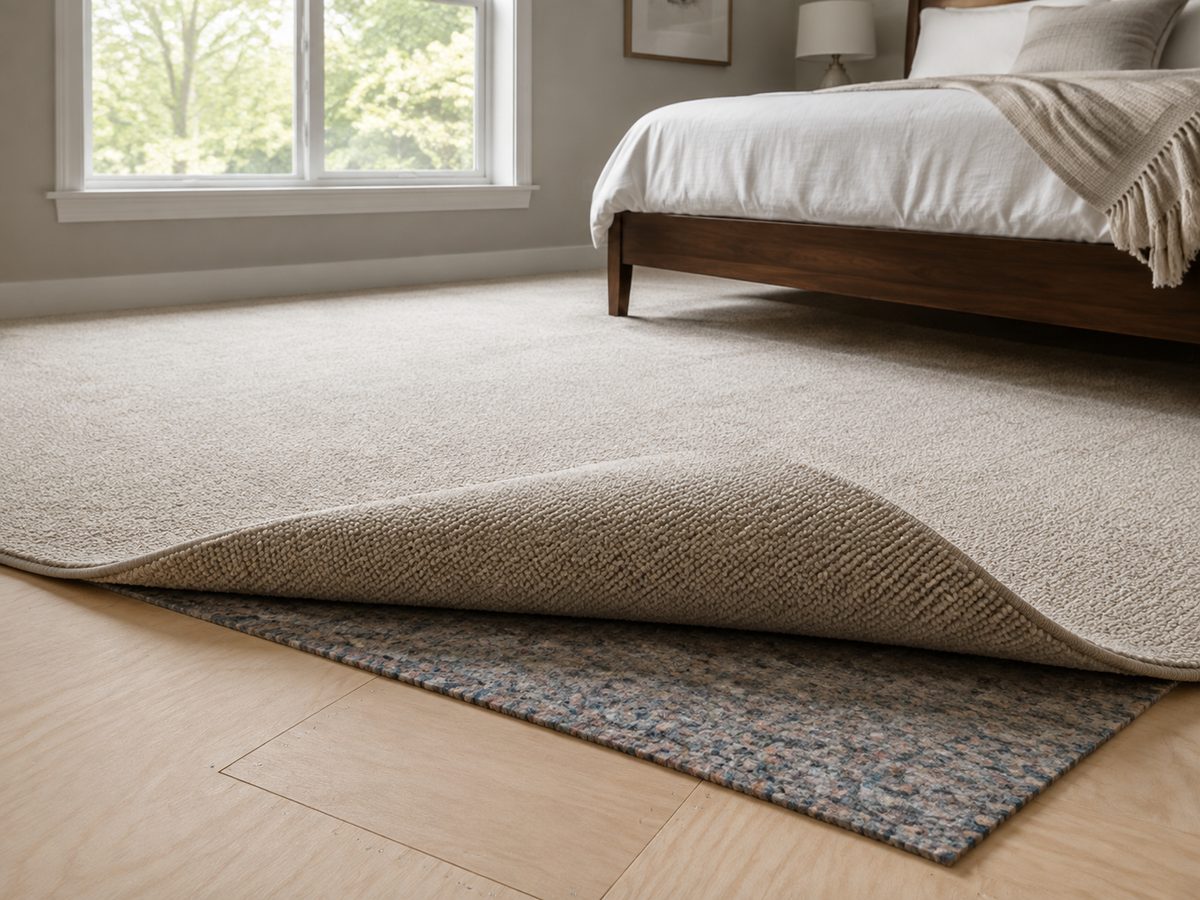
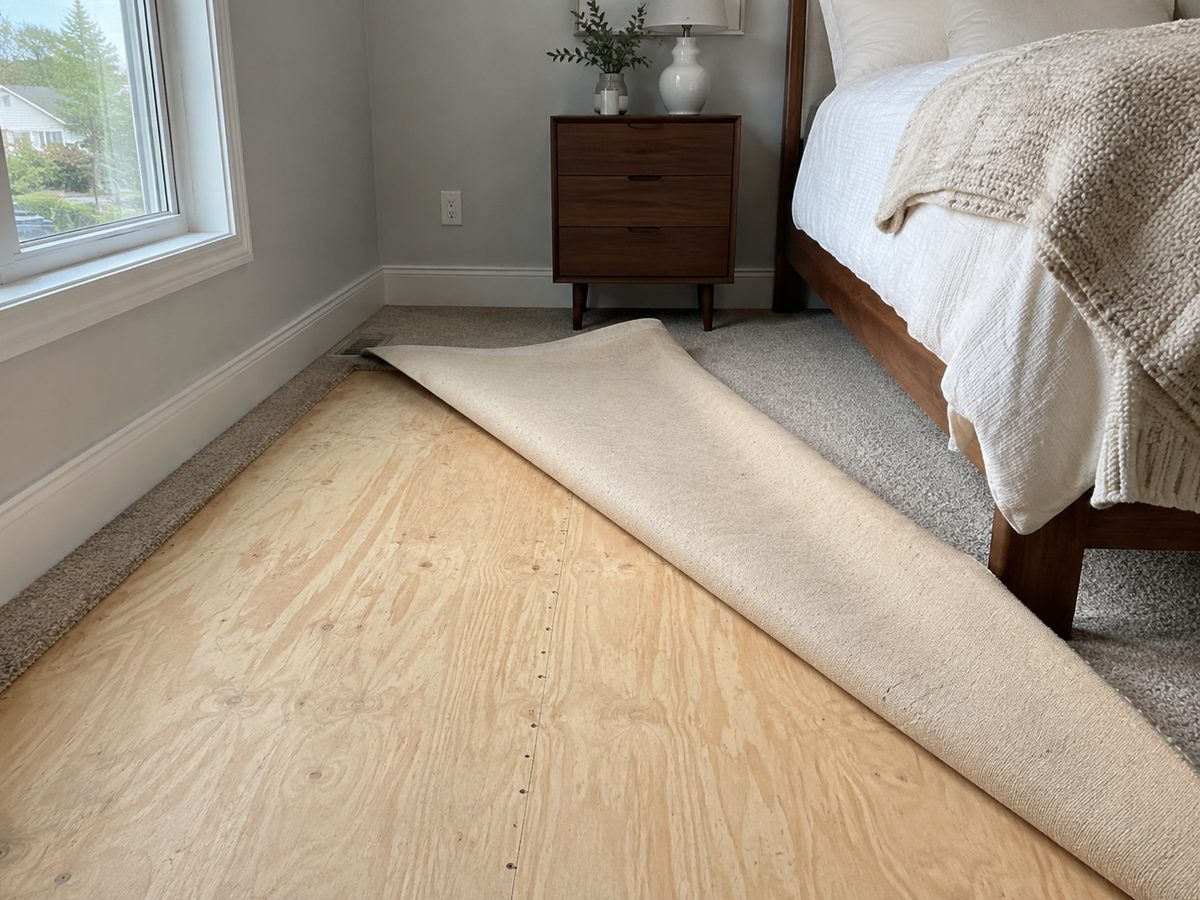


Most squeaks come down to moisture. Across a GTA year, indoor air swings from damp summers to dry, heated winters, and the framing lumber and subfloor sheeting slowly give up moisture and shrink. As the wood contracts, small gaps can open between the sheeting, the joists and the fasteners that hold them together. Step across that spot and the pieces flex and rub, or a nail shaft slides against the wood, and that friction is the sound you hear. Because a home takes time to settle and dry out, squeaks often surface years after it was built.
A squeak can start in more than one place, so it is difficult to diagnose from a description alone. On site, one person usually walks the floor while another listens from below in an unfinished basement or crawl space, or the noise is traced from above where the ceiling underneath is closed in. Pinpointing the exact spot matters, because the right step depends on whether the sound comes from loose sheeting, a joist that has pulled away, or a single loose fastener.
The usual aim is to draw the subfloor back down tight against the joist it has separated from. Where the underside is reachable, that can often be done from below without disturbing the floor covering. Where it is not, specialized screws are sometimes driven from above, down through the carpet and into the joist, then snapped off beneath the surface so the pile hides the head. In carpeted rooms, accessible sheeting can also be resecured once the covering is eased back for access.
Carpet-side steps make sense when wall-to-wall carpet sits over a wooden OSB (oriented strand board) subfloor, or where the floor is open from below through an unfinished ceiling. Squeaks tied to a structural connection between the joists and the main beams, or coming from hard-surface floors and closed-in ceilings with no access, are better assessed by a qualified contractor or a structural specialist.
Because a floor can squeak for more than one reason, and some causes sit deep in the structure, not every squeak can be fully silenced by working at the carpet level. A candid inspection sets that expectation before any carpet is lifted. Keeping indoor humidity steadier through the seasons can also slow how quickly new squeaks appear.
Not every noise underfoot is a subfloor squeak, and knowing the difference helps before anyone visits. A true squeak repeats in the same spot as weight passes over it, and it usually eases once you stand still. Other sounds have other causes:
Noting which sound you hear, and exactly where it happens, gives the on-site look a useful starting point.
Because the aim is to keep your carpet in place, most carpet-side work is done through it or beneath it rather than by replacing it. When screws are set from above, they pass between the fibres and are snapped off below the surface, so the pile closes over the spot and little shows. Where sheeting has to be resecured directly, a section of carpet is eased back from the tack strip and laid down again afterward. Older or brittle carpet does not always survive being lifted, and a visit will say so plainly before any covering is disturbed.
Drop a photo here or use the attach button, carpet damage, room overview, stairs, etc.